Setting up a canary cage correctly from day one makes a real difference in your bird's health and how quickly it settles in. The short answer: you need a cage that's big enough to fly horizontally, bar spacing no wider than 12mm (about 1/2 inch), at least three varied-diameter perches, separate food and water stations, a paper liner on the bottom, and a placement spot that's draft-free, well-lit during the day, and kept around 75°F (24°C). Everything below walks you through each of those steps in order.
Canary Bird Cage Setup: Step by Step Guide for Beginners

Maya Bennett
22 Mar 2026
Choosing the right cage for a canary
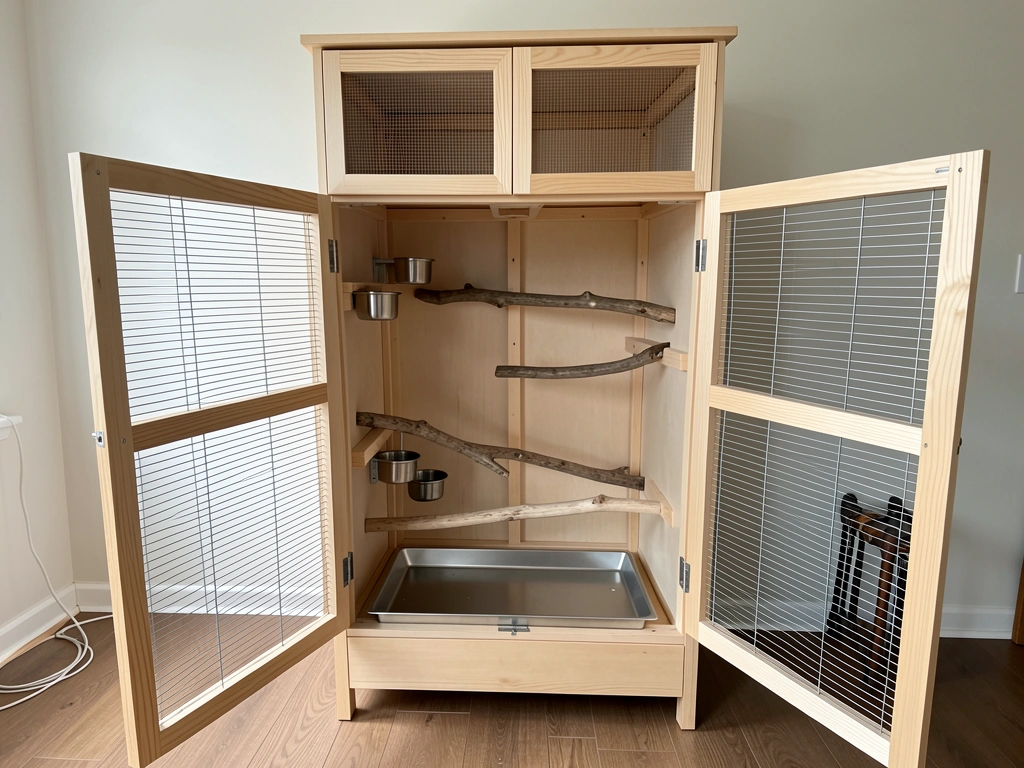
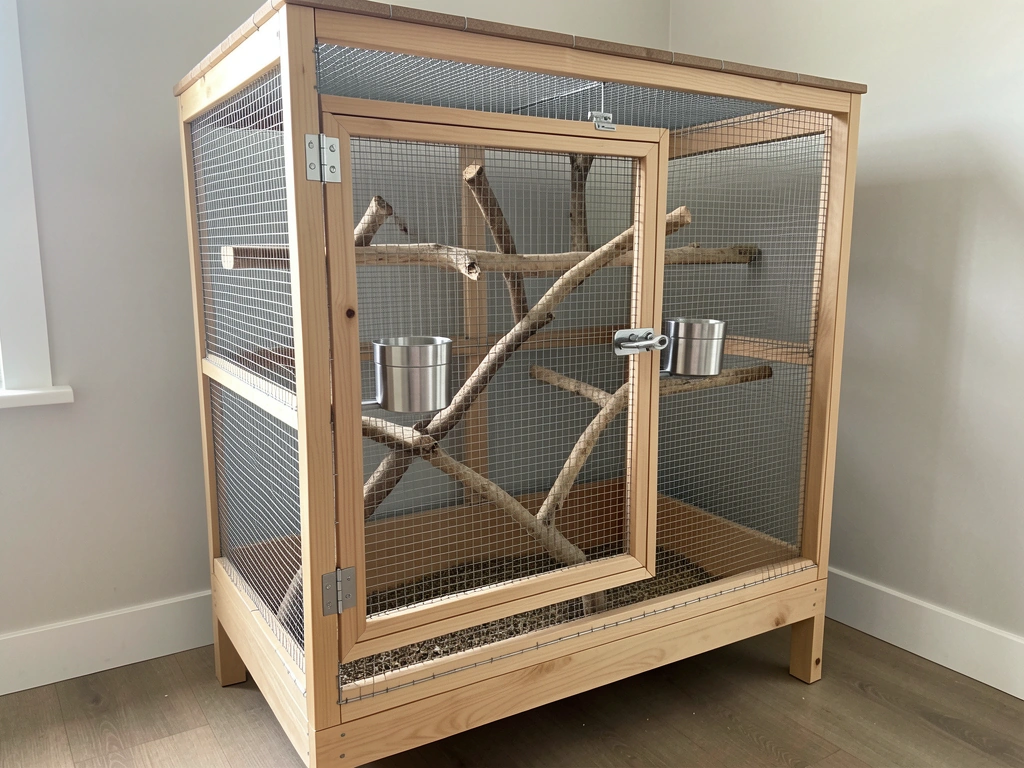
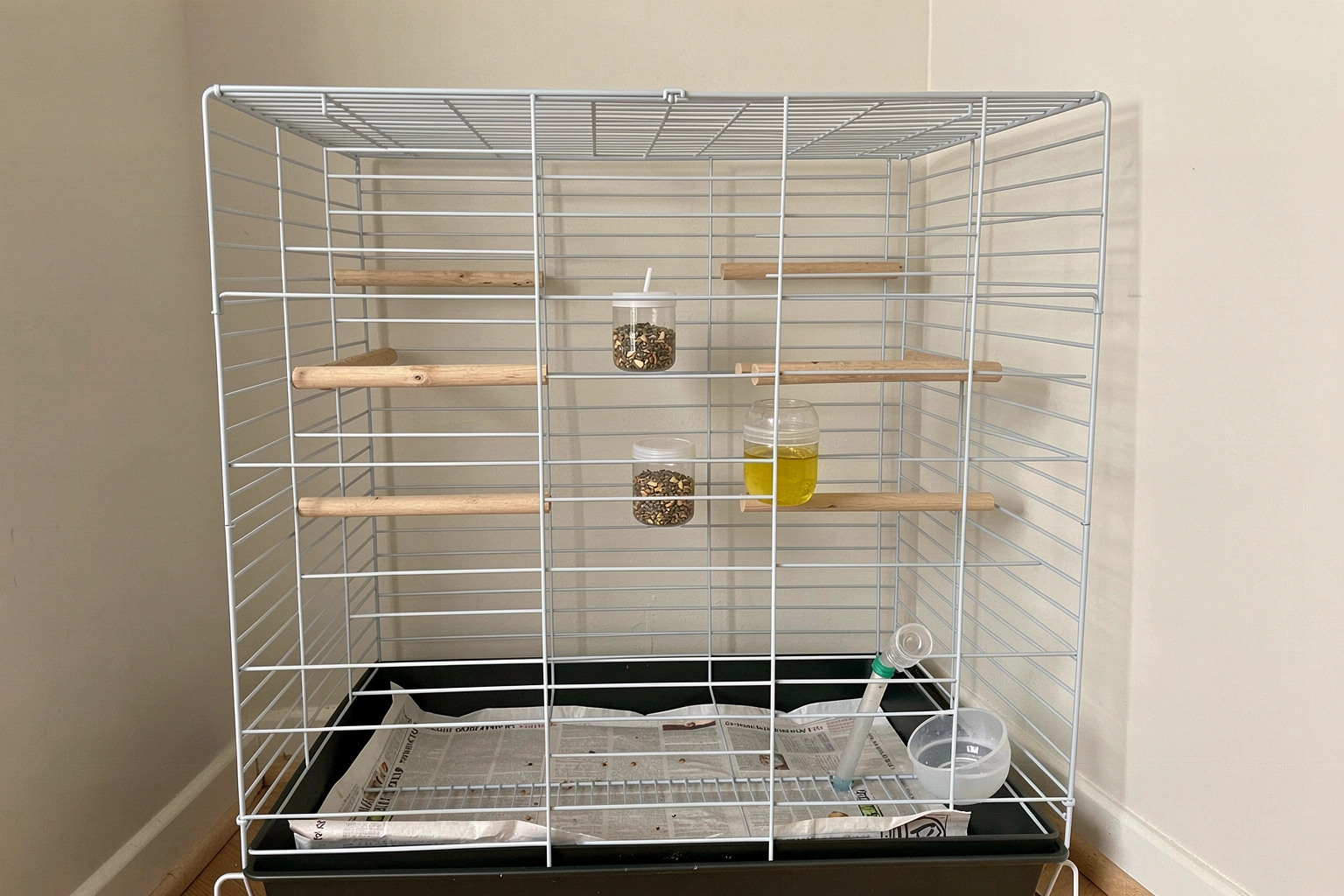
Canaries are flight birds, not climbers. Unlike parrots, they get their exercise by flying back and forth, so the most important cage dimension is length, not height. The absolute minimum for a single canary is 18 inches long by 14 inches wide by 18 inches tall, but bigger is always better. A practical upgrade that works well is something in the range of 32" L x 23" W x 63" H, which gives your bird real room to move and lets you add perches at multiple heights without crowding.
Bar spacing is a safety-critical spec that's easy to overlook when you're shopping online. The maximum bar gap for a canary is 12mm (roughly 1/2 inch). Wider than that and a canary can get its head wedged between bars, which can cause serious injury or death. If a cage listing doesn't specify bar spacing, skip it or contact the seller before buying.
For the cage material, stainless steel is the gold standard because it doesn't rust, doesn't leach metals, and is easy to disinfect. Powder-coated steel is a common and acceptable alternative as long as the coating is intact and has no flaking or chipping. Avoid anything with galvanized wire or galvanized metal parts. Hot-dipped galvanized wire is a known source of zinc exposure in birds, and zinc toxicity is a genuine risk. Check for white rust or flaking paint on any cage you already own before putting a bird in it.
Horizontal bars are preferable to vertical-only bars for canaries. While canaries don't climb the way parrots do, some horizontal bars give them more grip options. Avoid round or highly decorative cages with unusual bar configurations that create awkward perching geometry. A classic rectangular or dome-top design is the most practical choice.
Where to put the cage in your home
Placement matters more than most people realize. Canaries are sensitive to drafts, temperature swings, and air quality, so where you put the cage directly affects how healthy and comfortable your bird will be. Here's what to think through before you pick a spot.
Temperature and drafts
The target room temperature for a canary is around 75°F (24°C). They can handle a range, but you want to avoid anything that drops below about 59°F (15°C) consistently, and you especially want to avoid rapid temperature swings. Don't place the cage near an air conditioning vent, a drafty window, an exterior door, or directly in front of a heating duct. Even a subtle draft that you can't feel at face level can hit a cage hard if it's positioned in the airflow path.
Light and the day/night cycle
Canaries need a consistent photoperiod (light/dark cycle) to stay healthy. For a non-breeding bird, 12 hours of light and 12 hours of darkness is the right target. Place the cage near a window for natural light, but not in direct sunlight where the cage can overheat and the bird can't escape the sun. If natural light is inconsistent (which it is in most homes year-round), a simple full-spectrum bird lamp on a timer works well. For a breeding pair, the light requirement goes up to 14 to 15 hours of daylight to stimulate reproductive development, but if you're a first-time owner, stick with the 12-hour baseline.
Noise, fumes, and kitchen hazards
Canaries tolerate household sounds reasonably well, but they stress out with constant loud noise or unpredictable disturbances (like a room where a TV blasts at all hours or a spot where kids run through constantly). A living room with normal activity is fine. A kitchen is not a good location. Overheated non-stick cookware releases fumes that are lethal to birds at concentrations that are completely safe for humans. Candles, air fresheners, scented plug-ins, and aerosol sprays are all airway hazards too. Keep the cage in a well-ventilated room that doesn't have these risks.
Height and wall placement
Position the cage at eye level or slightly above, ideally against a wall so the bird feels secure on at least one side. A cage floating in the middle of a room with exposure on all sides can stress a canary out because it feels exposed. Giving it a 'back' to the cage helps enormously with settling in.
Setting up the essential accessories
Perches
Perches are probably the most important accessory you'll set up, and they're the most commonly done wrong. The correct diameter range for canary perches is about 3/8 to 3/4 inch (roughly 1 to 1.9 cm). At that size, the bird's foot wraps most of the way around the perch without fully closing, which is the correct grip. Too thin and the bird grips too tightly; too thick and the foot flattens out. Both lead to foot problems over time, including pododermatitis (bumblefoot), which is painful and can become serious.
You need at least three perches with varied diameters, shapes, and textures. Don't fill the cage with identical smooth dowel perches. A good setup includes one natural wood branch (like manzanita or java wood, which have irregular surfaces), one rope or cotton perch, and one slightly thicker natural branch. The variation gives the foot muscles different work to do throughout the day, which keeps them healthy. Aim for at least 10 inches of perch length per bird so they have enough landing space.
Food and water dishes
Use at least two food stations: one for seed (the canary's primary diet staple), and one for fresh foods or egg food. A third small cup for grit or calcium supplement like cuttlebone is worth adding. Canaries like cups or small dishes that clip to the bars rather than dishes that sit on the bottom where they get fouled by droppings. Place food dishes at a mid-level perch height, not at the very bottom of the cage.
Water should be in a clean sipper tube or a small covered water dish changed daily. Canaries also benefit from a bath, which can be a simple clip-on bath cup or a small shallow dish placed on the cage floor a few times per week. They love to bathe and it supports feather condition. Don't leave bath water in the cage for more than an hour or two; it gets fouled quickly.
Cage bottom and liner
Plain paper (newspaper or paper cage liners) is the best bottom liner. It's cheap, easy to swap daily, and lets you monitor droppings for health changes. Avoid sand substrate, corncob bedding, or walnut shell bedding on the cage floor. Sand can harbor bacteria, and loose substrates are hard to clean and can be accidentally ingested. If the cage has a grate above the tray, keep it in place so the bird doesn't walk through its own droppings. If there's no grate, clean the liner even more frequently.
Arranging perches and enrichment without overcrowding
The goal of your layout is to give the canary room to fly, not just sit. Place perches at two or three different heights, spread across the length of the cage, so the bird has to move between them. Don't stack perches directly above each other because the lower perch will get fouled by droppings from the bird above. Position the highest perch a few inches below the cage top so the bird has headroom.
Keep the middle section of the cage mostly clear so there's actual flight space between perches. A canary should be able to take at least a short horizontal flight from one perch to another without obstacles. If you're adding toys, limit it to one or two small items: a swing, a small bell, or a mirrored toy. Canaries like visual enrichment and a bit of variety, but a cluttered cage is stressful and reduces exercise. Rotate toys every week or two to keep things novel without adding more clutter.
A swing is one of the best enrichment tools for a canary specifically because it adds movement and stimulation without taking up fixed space. Mount it in the upper third of the cage. A mirror can be entertaining for a solo canary but can also overstimulate some birds. Watch your bird's behavior and remove it if the bird becomes obsessively focused on it.
Cleaning routines and sanitation
A clean cage isn't optional. Poor hygiene is one of the top causes of illness in pet canaries, and it's completely preventable with a simple routine.
Daily tasks
- Replace the cage liner (paper) every day or every other day at minimum
- Refill food and water with fresh supplies
- Remove any uneaten fresh food within a few hours to prevent mold
- Rinse water dishes and food cups with hot water
- Quick visual check on the bird: posture, activity level, droppings
Weekly deep clean
Once a week, do a full clean. Remove everything from the cage: perches, dishes, toys, tray. Wash all components with hot water and an unscented dish soap, rinse thoroughly, then disinfect. For disinfection, you have a few good options. A diluted bleach solution at 1 part bleach to 9 parts water (1:10 ratio) is effective and widely available. Alternatively, F10SC Veterinary Disinfectant diluted at 1:250 is a bird-safe, veterinarian-recommended product that's excellent for avian environments. Quaternary ammonium compound-based cleaners are also effective if you can confirm they're safe for birds after rinsing. Whichever you use, rinse everything thoroughly with plain water afterward and let it air dry completely before putting it back in the cage. Residual disinfectant is a respiratory hazard.
Never use scented cleaning products, aerosol sprays, or essential-oil-based cleaners near the cage or on cage components. Bird respiratory systems are extremely sensitive, and what smells pleasant to you can cause serious harm to a canary.
Perch and accessory cleaning
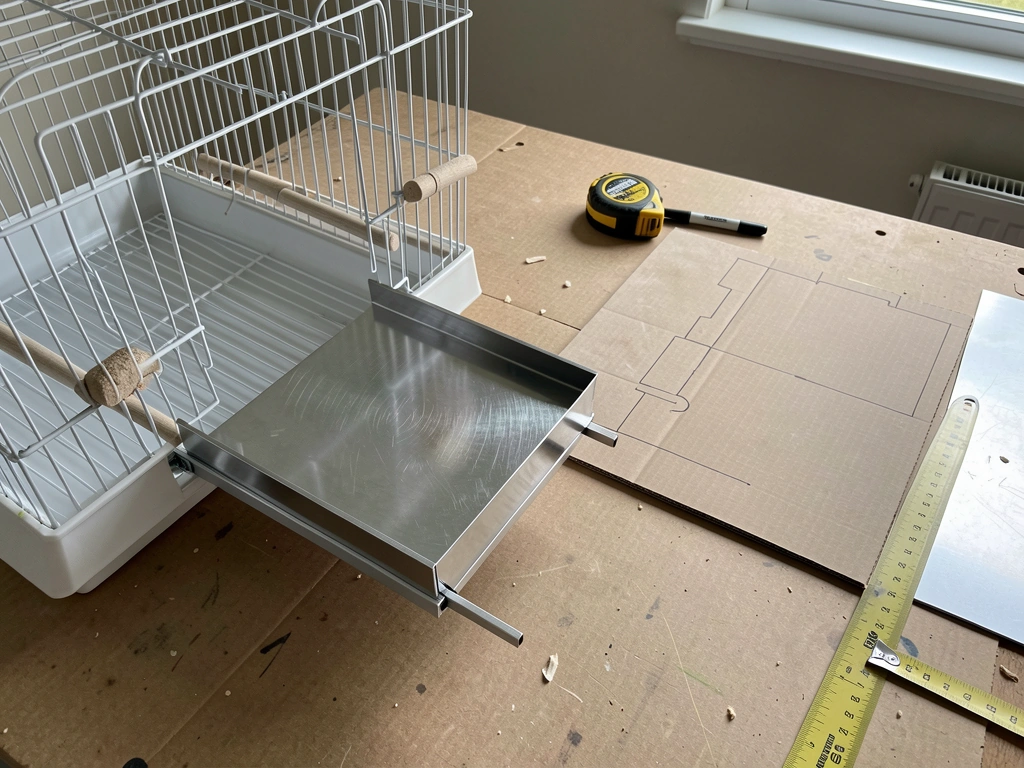
Perches need cleaning weekly as part of your deep clean. Natural wood perches can be scrubbed with a stiff brush and hot water, dried fully in the sun if possible, or replaced when they're heavily soiled. Rope perches should be watched closely for fraying or soiling and replaced when they get to that point. A soiled rope perch is a bacteria trap. Check the bottom tray hardware for rust or damage every time you clean, and replace it if the coating is compromised.
Safety checklist: what to avoid and common setup mistakes
Here are the most common mistakes first-time canary owners make when setting up a cage, along with what to do instead.
| Mistake | Why it's a problem | What to do instead |
|---|---|---|
| Bar spacing wider than 12mm | Bird can get head stuck or escape | Verify bar spacing before purchasing; max 12mm |
| Galvanized wire or parts with flaking coating | Zinc toxicity risk | Use stainless steel or intact powder-coated cages only |
| All identical smooth dowel perches | Foot muscle fatigue, bumblefoot risk | Use at least 3 perches with varied diameter, texture, and shape |
| Perches placed directly above each other | Lower perch gets fouled by droppings | Stagger perch positions horizontally |
| Cage near kitchen, vents, or drafty windows | Fume exposure, temperature stress | Place in a stable, draft-free room away from the kitchen |
| Loose substrate like sand or corncob on the floor | Bacteria harbor, ingestion risk | Use plain paper liner changed daily |
| Scented or aerosol cleaners near the cage | Respiratory damage or death | Use unscented, bird-safe disinfectants; rinse and air dry fully |
| No day/night light schedule | Disrupts natural rhythms and health | 12 hours light / 12 hours dark, consistent daily |
| Overcrowded cage with too many toys | Eliminates flight space, causes stress | Limit to 1-2 enrichment items; keep middle of cage clear |
| Skipping daily liner changes | Bacterial buildup, ammonia odor, disease risk | Change paper liner daily or every other day at minimum |
Your quick-start setup plan before you bring the canary home
Run through this list the day before you bring your canary home. Everything on it should be done and verified before the bird arrives, not after. A bird that goes straight into a properly set-up cage settles in faster and with less stress.
- Confirm cage dimensions: at least 18" L x 14" W x 18" H, bar spacing no more than 12mm, no galvanized or flaking-paint parts
- Clean the cage with hot water and your chosen bird-safe disinfectant (bleach 1: 10 or F10SC at 1:250), rinse thoroughly, and let it air dry completely
- Install three perches with varied diameters (3/8" to 3/4" range), varied textures, staggered at different heights with no perch directly above another
- Add two food cups (one for seed, one for fresh food) and one water cup or sipper, all clipped at mid-height perch level
- Place one small enrichment item (a swing works well for canaries) in the upper third of the cage
- Line the tray with plain paper (newspaper or cage liner) and confirm the grate is in place above it
- Position the cage against a wall, at eye level or slightly above, away from vents, drafty windows, and the kitchen
- Check room temperature: target 75°F (24°C), confirm no strong temperature fluctuations
- Set up a consistent light schedule: 12 hours light on, 12 hours light off (use a timer if needed)
- Fill food and water fresh on the day the bird arrives, and add a bath cup with shallow clean water to welcome them in
Once your canary is home, give it a day or two to adjust before handling or making changes to the setup. Watch its behavior closely in the first week: perch usage, eating, drinking, and droppings tell you a lot. If something looks off (lethargy, fluffed feathers for extended periods, labored breathing), contact an avian vet promptly. A well-set-up cage removes most preventable health risks from the equation, and that's the best foundation you can give a cage from day one.
FAQ
Can I use a wider bar spacing if the cage looks sturdy and my canary is small?
Avoid it. Even if your canary seems fine initially, 12mm (about 1/2 inch) is the safety limit because a canary can still wedge its head as it grows or if it leans during feeding. If the cage listing does not provide bar spacing, choose a different cage or confirm directly with the seller before buying.
What should I do if I already bought a cage and it has galvanized parts?
Do not place a canary in it. Galvanized metal can contribute to zinc exposure. If you cannot replace the cage immediately, treat it as unsafe until the galvanized components are removed or fully replaced with non-galvanized equivalents, and check for flaking or white rust on any metal before any use.
How many perches are enough, and do they need to be exactly different diameters?
At least three perches is the minimum, and they should not all be identical. You do not need custom diameters, but you do want clear variation across the correct range (about 3/8 to 3/4 inch). Also spread them across the cage length so your bird must fly between them, not just move by hopping.
Where exactly should I mount the top perch so it does not foul the bird above it?
Put the highest perch a few inches below the cage top to give headroom, then do not stack perches directly in line above one another. If you keep perches staggered along the length and slightly offset side-to-side, droppings from an upper perch will be less likely to land on the lower one.
My canary’s feet look a little red sometimes, should I change the perches right away?
Check perch grip first, then cleanliness. Redness can be an early sign of bumblefoot risk from an incorrect perch diameter or from soiled surfaces. If you see persistent discoloration, switch to the correct diameter natural branches and rope, and increase cleaning frequency on the tray liner while monitoring behavior and foot use.
Is it okay to put the seed dish at the bottom so it is easier to reach?
Better not. Keeping food cups off the cage floor helps prevent droppings contamination. Use bar-clipped or otherwise elevated cups, and place them around mid-level perch height so your canary has to move and does not constantly eat from a fouled bottom area.
Do canaries need a bath every day, and how do I keep bath time safe?
Bathing a few times per week is usually sufficient. Offer it briefly and do not leave bath water sitting in the cage for more than an hour or two because it fouls quickly. After bath access, remove the bath promptly, and keep the room free of drafts so the bird does not chill.
What’s the best way to handle lighting if my room has sunlight only part of the day?
Aim for a consistent daily light cycle, 12 hours light and 12 hours dark for a non-breeding bird. If natural light is inconsistent, use a full-spectrum bird lamp on a timer so the photoperiod does not drift with weather or seasonal daylight changes.
Can I place the cage near a window if it is sunny sometimes?
You can place it near a window for natural light, but do not allow direct sun to hit the cage in a way that heats it up. If you notice the cage becomes noticeably warm, move it away from direct sun and rely on timed lighting to keep the environment stable.
How should I position the cage if my apartment has constant kitchen cooking smells and fumes?
Avoid the kitchen. Heat-based fumes and non-stick cookware residues can be lethal to birds even at levels that do not bother humans. If your best option is near a kitchen, select a different room, or at minimum ensure the bird is far from cooking areas with strong, controlled ventilation, but the safest choice remains keeping the cage out of the kitchen entirely.
What is the safest cleaning routine if I cannot disinfect with bleach every week?
You can use a bird-safe disinfectant like F10SC if it is diluted to the correct ratio and you rinse thoroughly afterward. No matter which product you choose, let all parts air dry completely and never reassemble while there is any residual odor, taste, or wetness. Also avoid scented cleaners and essential-oil products near the cage.
How often should I check the cage bottom hardware and why does it matter?
Check it every time you clean. Tray hardware can rust or have coating damage that you might not notice until it becomes rough or unstable, and those changes can lead to buildup, contamination, or injury risk during routine cleaning and disassembly.
If my canary seems stressed after moving, when should I stop adjusting the setup and just monitor?
Let the bird settle for at least a day or two before making changes, and use the first week to confirm baseline behaviors: eating, drinking, normal perch usage, and droppings that look consistent for your bird. If you see lethargy, extended fluffed-feather posture, or labored breathing, contact an avian vet promptly instead of continuing to tweak the environment.