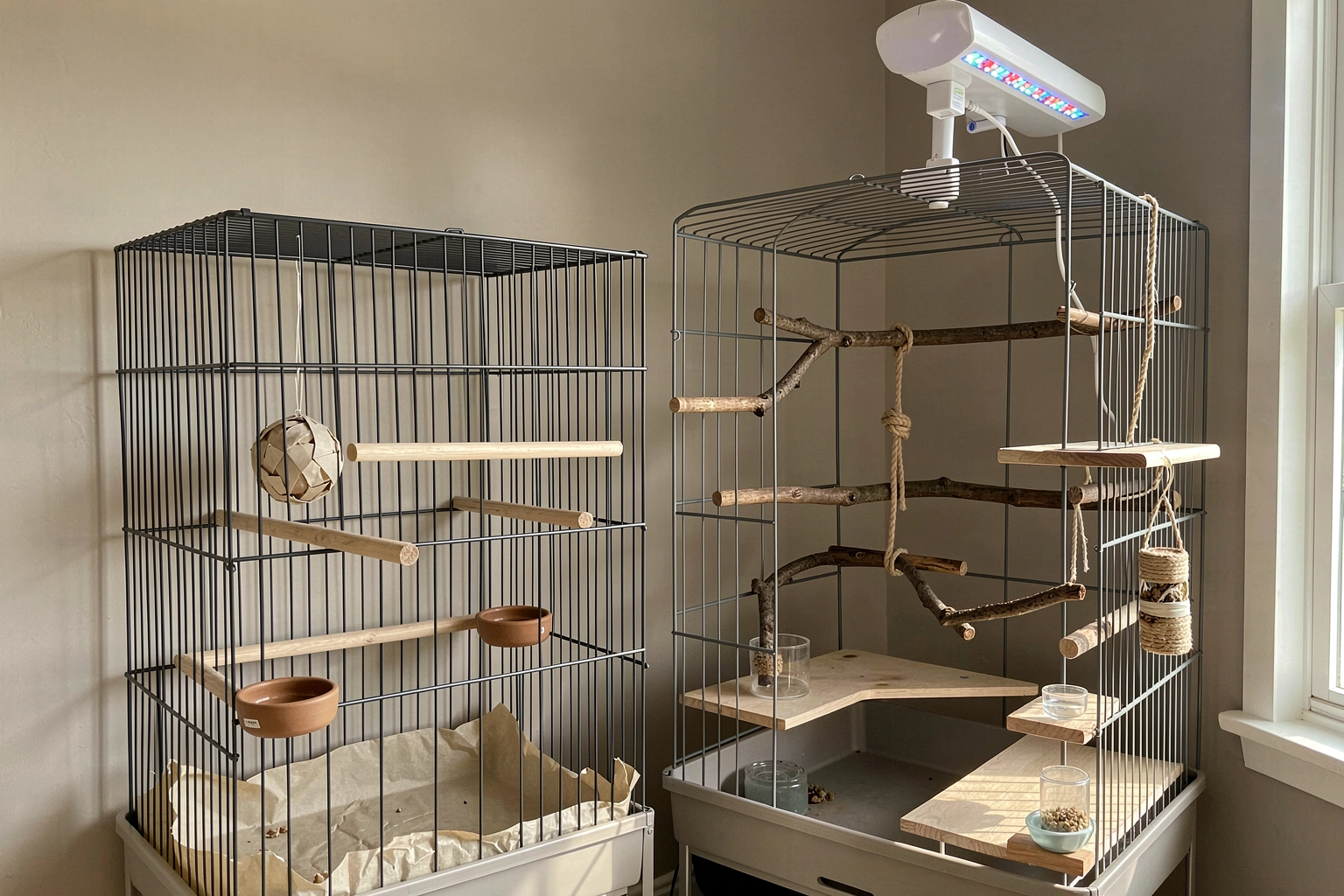
Setting up a finch cage correctly comes down to a few non-negotiable decisions: the right cage size and bar spacing, a smart interior layout that suits how finches actually move, safe materials, and a spot in your home that keeps them healthy. Get those right and everything else falls into place. Here is exactly how to do it.
Finches Bird Cage Setup: Step-by-Step Guide for Today

Maya Bennett
22 Mar 2026
Choosing the right finch cage size and type
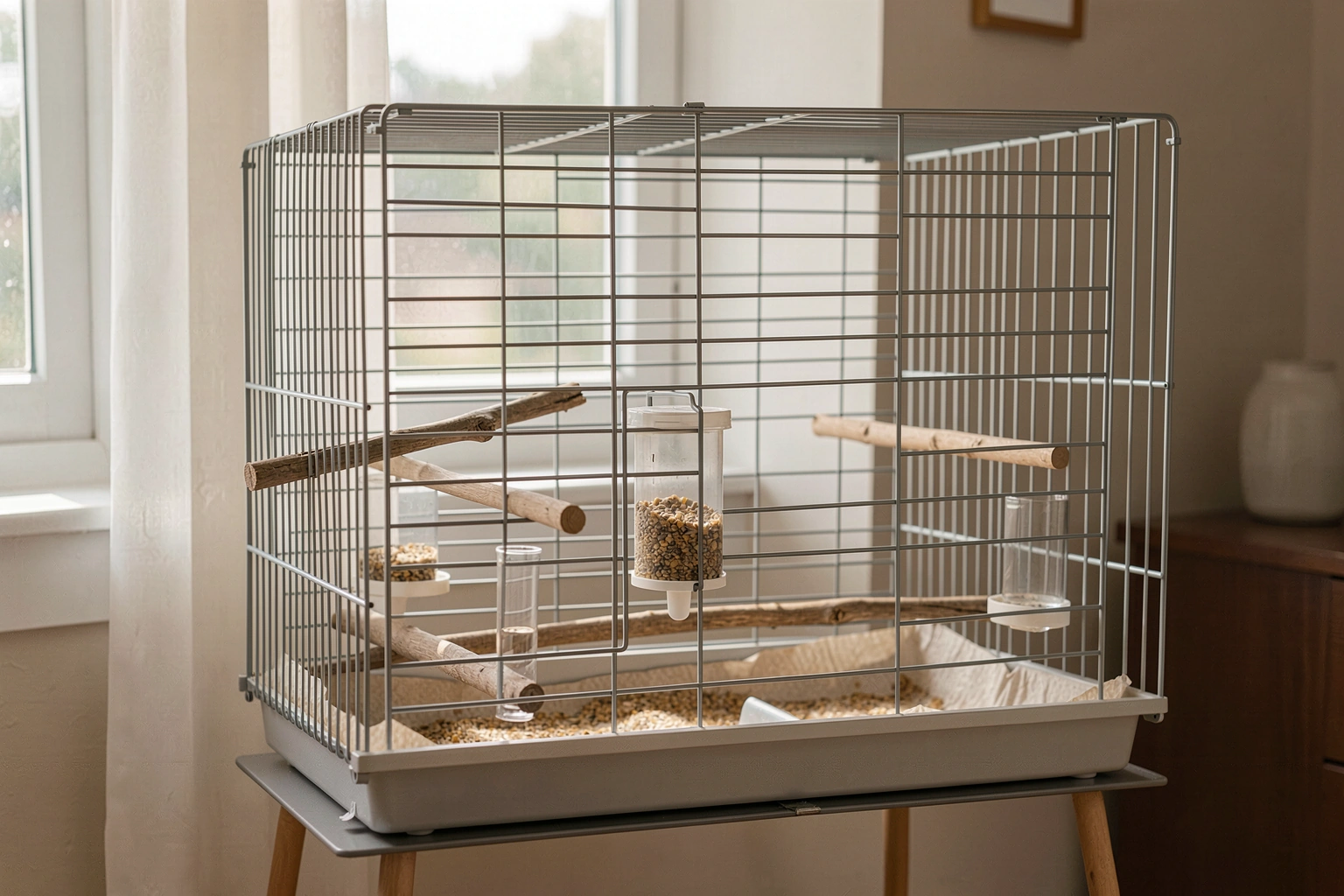
Finches are not climbers like parrots. They fly horizontally between perches in short bursts, which means the length of the cage matters far more than the height. A tall, narrow cage that might work fine for other birds is genuinely wrong for finches. Always prioritize width and length over height.
For a small finch like a zebra finch (roughly 10 to 12 cm long), animal welfare guidance puts the minimum cage length at 44 cm and minimum height at 33 cm. In practical terms, treat those numbers as the absolute floor, not a comfortable target. For a pair of finches, I'd aim for at least 60 cm long, and for a small group of four or more, go for 90 cm or wider. The more horizontal flight space you give them, the happier and healthier they will be.
Bar spacing is the detail most first-time finch owners overlook, and it is genuinely important for safety. Keep bar spacing at no more than 1/2 inch (about 1.25 cm). Wider gaps can trap a finch's head or allow a small bird to squeeze through and escape. This applies to the doors and any mesh panels too, not just the main bars.
For cage style, go with a rectangular cage with horizontal bars on at least two sides. Avoid round cages entirely: they do not give finches useful flight lines and the curved walls can disorient birds. A flight cage (longer than it is tall) is the gold standard. If you are housing a colony of six or more finches, a proper aviary-style flight cage that is 90 cm or longer is well worth the investment.
Inside the cage: perches, feeders, and water setup
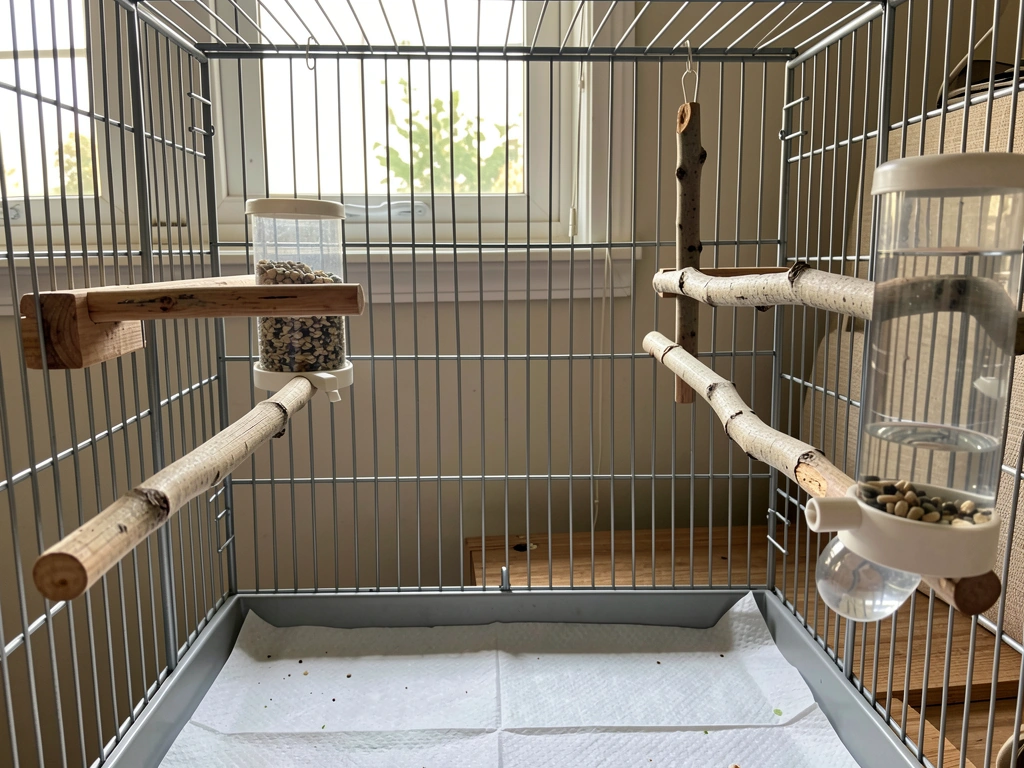
The interior layout of a finch cage should support natural behavior and make daily cleaning quick and easy. Think of it in three zones: perches at both ends for flight landing points, food and water in stable accessible positions, and open central airspace so birds can actually fly without crashing into things.
Perches
Place perches at each end of the cage at the same height so finches have clear flight paths between them. Use natural wood perches of varying diameters (between 1 and 1.5 cm for small finches) to exercise the feet and prevent pressure sores. Good safe wood options include apple, pear, hazel, and willow. Avoid dowel-only setups: uniform diameter perches cause repetitive stress on the same foot muscles. Do not place perches directly above food or water dishes, or droppings will contaminate them constantly.
Feeders and water
Use enclosed seed feeders rather than open dishes where possible. They keep seed fresher, reduce mess, and make it easier to see when the feeder is running low. Finches eat a lot relative to their size, so check feeders daily. For fresh food and soft food, a small open dish works fine, but remove uneaten fresh food within a few hours to prevent spoilage.
Water should be fresh every single day without exception. A tube-style water bottle or a small, stable water dish both work. If you use a dish, place it somewhere birds cannot splash grit or seed husks into it easily. I prefer the enclosed tube drinkers because they stay cleaner longer, but either is fine as long as you are consistent about daily changes.
Cage floor and liner
Line the cage tray with plain paper, newspaper, or purpose-made cage liner paper. Change it every one to two days. Sand sheets look natural but are not necessary and can actually irritate finch feet if coarse. Avoid cedar or pine shavings: the aromatic oils are toxic to birds. Plain paper is the safest and most practical liner you can use, and it makes it easy to monitor droppings for health changes.
Nesting and breeding considerations (if you plan to breed)
If you are keeping a mixed-sex pair of finches, assume they will breed if you provide a nest. Finches are enthusiastic breeders and will use almost any enclosed space you offer. If you do not want breeding, keep same-sex birds or remove any nesting material and nest boxes.
For intentional breeding, add a small enclosed nest box (a basic wooden box with a round entry hole of about 3.5 to 4 cm diameter works well for zebra finches) and supply soft nesting material such as chemical-free dried grass, coconut fiber, or small feathers. Hang the nest box high in the cage on the outside of the bars if possible, to preserve interior flight space. Finches feel safer nesting up high.
During breeding, reduce your cleaning disturbance around the nest. Check from a distance and avoid opening the nest box repeatedly while eggs are present or while chicks are young. Once chicks fledge, remove the nest box and thoroughly clean it before any reuse. Allowing finches to breed too frequently (more than two or three clutches per year) puts significant strain on the hen, so remove the nest box between breeding cycles.
Safe materials and what to avoid
Material safety is one of those areas where a small mistake can have serious consequences for birds, so it is worth being deliberate here. Finches are sensitive to fumes and can be harmed by toxic coatings or treated woods even without direct contact.
| Material / Item | Safe | Notes |
|---|---|---|
| Stainless steel cage bars | Yes | Best long-term option, easy to clean, no coating to chip |
| Powder-coated steel (non-toxic coating) | Yes | Check that coating is bird-safe and intact; replace if chipping |
| Galvanized wire (new) | Caution | Can cause zinc toxicity; if used, scrub with vinegar and rinse before use |
| Chrome-plated bars | No | Chrome can cause toxicity; avoid |
| Apple, pear, hazel, willow wood perches | Yes | Untreated and pesticide-free only |
| Pine or cedar shavings | No | Aromatic oils are toxic to birds |
| Plain paper liner | Yes | Safest and easiest liner option |
| Sand sheets (fine) | Caution | Not necessary; coarse grades can irritate feet |
| Plastic perches and toys | Caution | Only if labeled bird-safe; check for sharp edges or small detachable parts |
| Non-stick coated cookware nearby | No | PTFE fumes (Teflon) are rapidly fatal to birds; keep out of the home entirely |
One thing people often miss: cleaning products. Never use aerosol sprays, scented candles, or air fresheners near the cage. For cage cleaning, a diluted white vinegar solution or a bird-safe disinfectant is all you need. Rinse thoroughly and allow to dry before putting birds back.
Placement in your home: light, drafts, temperature, and noise
Where you put the cage has a direct effect on your finches' health and behavior. A poorly placed cage can stress birds even if everything inside it is perfect.
- Light: Finches need a natural light cycle. Place the cage near a window where they get natural daylight, but not in direct afternoon sun, which can overheat the cage quickly. Aim for indirect natural light for most of the day. If natural light is limited, a full-spectrum bird lamp on a timer (12 hours on, 12 hours off) is a good supplement.
- Drafts: Avoid placing the cage near air conditioning vents, exterior doors, or windows that are opened frequently. Finches are vulnerable to sudden temperature drops and drafts, which can cause respiratory illness quickly.
- Temperature: Keep room temperature between 18 and 25 degrees Celsius (65 to 77 degrees Fahrenheit). Finches can handle mild variation but should not be exposed to sustained cold below 15°C or sudden chills.
- Noise and activity: Place the cage in a room with moderate household activity. Finches are social and enjoy ambient noise, but avoid positioning the cage next to a TV that is always on at high volume, near a speaker, or in a kitchen where cooking fumes and temperature spikes are a risk.
- Height: Position the cage at or slightly above eye level. Finches feel more secure when they can see the room from a slightly elevated vantage point.
The living room or a quiet family room is usually the best spot. Bedrooms can work if you cover the cage at night to ensure a consistent dark period, but avoid kitchens for the reasons above.
Cleaning and daily maintenance routine
Finches are relatively low-maintenance compared to parrots, but a consistent cleaning routine prevents disease and keeps the cage smelling fresh. Here is a simple routine that takes about five minutes a day.
Daily tasks (5 minutes)
- Replace water completely with fresh, clean water
- Refill seed feeders and remove any empty husks (blow gently across the top of seed dishes to clear husk buildup)
- Remove and replace the cage liner paper
- Remove any uneaten fresh or soft food within 2 to 4 hours of offering it
- Do a quick visual health check: are all birds active, eating, and perching normally?
Weekly tasks (15 to 20 minutes)
- Remove and scrub all perches with hot water and a stiff brush; replace any that are cracked or heavily soiled
- Wash all food and water dishes with hot soapy water, rinse thoroughly
- Wipe down cage bars and tray with diluted white vinegar or a bird-safe disinfectant, rinse and dry before birds go back in
- Check cage latches, door hinges, and bar integrity for any signs of rust, damage, or loose fittings
Monthly tasks (30 to 45 minutes)
- Full deep clean: move birds to a travel cage temporarily, disassemble and scrub the entire cage
- Inspect and replace perches as needed
- Check and clean the nest box if breeding birds are present
- Review cage placement and lighting to make sure conditions are still appropriate
Step-by-step setup checklist and common mistakes
Use this checklist when setting up your cage for the first time. Go through it in order and tick each item off before adding your birds.
- Choose a rectangular flight cage: minimum 44 cm long for a single small finch, at least 60 cm for a pair, and 90 cm or more for a group of four or more
- Confirm bar spacing is no more than 1/2 inch (1.25 cm) on all sides including doors
- Confirm cage bars are stainless steel or intact bird-safe powder-coated steel with no chipping or rust
- Place two natural wood perches at opposite ends of the cage at the same height, using varied diameter branches (1 to 1.5 cm for small finches)
- Install enclosed seed feeder(s) and a water dish or tube drinker, positioned so they are not under perches
- Line the cage tray with plain paper or newspaper
- Add a nest box and nesting material only if you intend to breed
- Position the cage at or slightly above eye level, near indirect natural light, away from drafts, cooking fumes, and temperature extremes
- Do a final safety check: no sharp edges, no loose parts, no toxic materials, all latches secure
- Allow the cage to air out for a few hours before placing birds inside, especially if any cleaning products were used
Common mistakes to avoid
- Buying a tall, narrow cage instead of a wide horizontal flight cage: finches fly sideways, not up and down
- Using bar spacing wider than 1/2 inch: a finch head can become trapped in gaps larger than this, which is dangerous
- Placing perches directly above food and water dishes: droppings will contaminate them every single day
- Using pine or cedar shavings as bedding: the aromatic oils are toxic to birds; stick to plain paper
- Positioning the cage in or adjacent to the kitchen: cooking fumes, non-stick pan emissions, and temperature swings are genuine hazards
- Offering non-toxic cleaning products but not rinsing thoroughly: residue is just as harmful as the cleaner itself
- Overcrowding the interior with toys and decorations: leave open flight space in the middle of the cage
- Skipping daily water changes: stale water grows bacteria quickly and is a common cause of illness
- Assuming same-sex pairs will not attempt breeding behaviors: provide or withhold nest boxes based on your intent, not assumptions
Once your cage is set up and your birds are settled, the daily routine becomes second nature very quickly. Finches are rewarding birds to keep because they are active, vocal, and social, but they are also sensitive to their environment in ways that make getting the setup right genuinely important. Take the time to do it properly now and you will spend far less time troubleshooting problems later. If you are also considering setting up for canary bird cage setup for canaries or budgies, the core principles overlap but there are species-specific differences worth reading up on separately.
FAQ
Can I use a cage that is tall as long as it is wide enough for finches bird cage setup?
For finches, height alone does not make up for insufficient length. Choose a rectangular, flight-style cage where the horizontal distance between perches supports short bursts, and avoid relying on vertical space for “climbing” behavior finches do not do well.
What bar spacing should I check if my cage has doors and side panels too?
Verify gaps everywhere birds can reach, including door frames and any mesh panels, not just the main bars. If you can insert a small head-sized probe or if a finch can reach through far enough to get trapped, the spacing is too large.
How do I decide how many perches to use, and how far apart they should be?
Use perches at both ends at the same height for the primary flight path, then add extras in ways that do not force crowded landings. If perches are uneven or too close together, finches may hesitate to fly and will spend more time on one set of feet.
Is it okay to use natural branches from outside for finches, or should I buy perches only?
If you collect wood outdoors, only use species you are confident are safe, and avoid anything treated, rotted, or exposed to pesticides. Bake-free, unverified outdoor wood can carry residues or mites, so purchasing known safe wood perches is the lower-risk choice.
Do finches need toys, swings, or ladders in a finches bird cage setup?
Basic enrichment can help, but finches do not need ladders to “climb” like some birds. If you add anything, keep it out of the main flight line, use safe, non-toxic materials, and avoid items that increase collisions or create tight snag points.
What is the best way to place food and water so they stay clean?
Keep water away from heavy seed falling paths, and do not mount bowls directly under perches. If seed or husks can collect above the water, use a covered or enclosed drinker and reposition dishes so splashing is minimal.
Can I use sand or grit on the bottom instead of paper liners?
For most finch cage setups, plain paper or liner paper is safer and easier to monitor. Coarse or irritating substrates can bother feet, and they also make it harder to spot droppings changes quickly.
How long can I leave fresh food in the cage before removing it?
Remove uneaten fresh and soft foods within a few hours, then replace with smaller portions more frequently. Keeping food longer increases spoilage and bacterial growth, which is a common cause of digestive issues.
If I use a water dish, how can I prevent splashing and contamination?
Use a stable dish with a low splash profile and place it where birds cannot easily flick seed husks into it. Even then, change water daily without exception, and add extra monitoring if you see grit getting into the dish.
How do I handle odor or droppings monitoring without disturbing the birds too much?
Use shorter, consistent cleaning sessions and check droppings while doing routine tray changes. Monitor from outside the cage when possible, and avoid repeated nest box openings or frequent major rearranging once birds are settled.
What cleaning products are safest, and what should I avoid besides scented items?
Avoid aerosols, air fresheners, and anything strongly scented. For disinfection, use a bird-safe disinfectant or diluted white vinegar, then rinse thoroughly and dry completely before returning birds.
Is covering the cage at night always required in a finches bird cage setup?
Bedrooms can work if you provide consistent dark hours. Instead of partial coverage that leaves light leaks, aim for a reliable dark period every night so sleep and stress levels stay stable.
My finches won’t use the perches, what should I check first?
Check perch height and alignment, make sure perches exist at both ends at the same height, and ensure the center area remains open for horizontal flight. Also confirm bar spacing and interior obstructions are not forcing cautious behavior.
Do I need to quarantine new finches before adding them to the cage?
If you are introducing new birds to an existing setup, quarantine first to reduce the risk of introducing illness. Keep new birds separate until you can confirm normal droppings, appetite, and activity, then introduce gradually while monitoring closely.
How do I stop breeding if I accidentally end up with nest behavior?
Remove any nesting material and nest boxes if you do not want chicks. In mixed-sex pairs, finches may breed readily when enclosed spaces are available, so prevention is easier than trying to interrupt after eggs are present.
If I do want breeding, when should I remove the nest box and what should I clean?
After chicks fledge, remove the nest box and thoroughly clean it before reuse. Do not keep nesting material continuously between clutches, and avoid allowing too many breeding cycles per year to reduce hen strain.
Next Article
Natural Bird Cage Setup: Small and Large Guide
Step-by-step natural bird cage setup for small and large birds: placement, lighting, perches, safe materials, enrichment